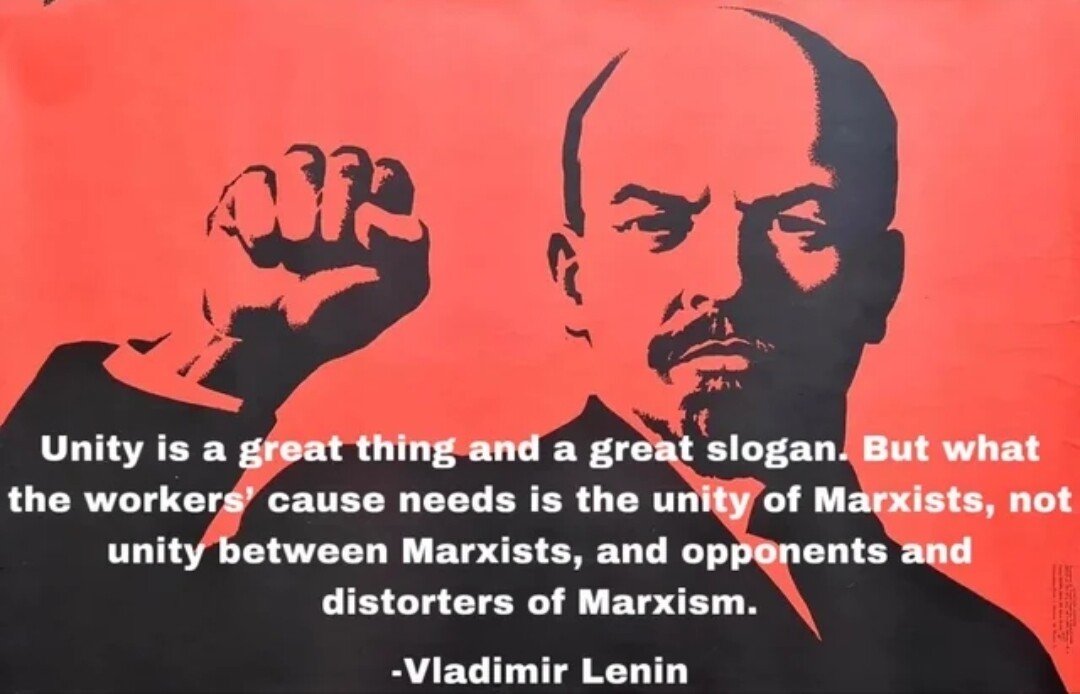
The crisis of the Irish left is not primarily one of numbers, organisation, or even energy. It is a crisis of political clarity. In conditions of defeat, low class consciousness, and the dominance of liberal ideology, unity has increasingly been treated as an end in itself, divorced from principles, programme and accountability.
In this environment, criticism is framed as divisive, while silence and accommodation are normalised and condoned. This article argues the opposite: a left that fears criticism more than liberal domination has already conceded ideological leadership.
Communists understand opportunism as a material phenomenon. It emerges most clearly in periods of retreat, when organisations prioritise stability, access, and legitimacy over struggle. Liberal norms such as proceduralism, tone-policing, reputational anxiety, have entered left spaces and organisations and reshaped political behaviour.
Opportunism manifests through:
- Avoidance of open political disagreement
- Silence in moments of repression
- Substitution of process for politics
- Accommodation to liberal or institutional power
This adaptation to the existing balance of forces is what pushes the working-class further right.
Calls for unity are never politically impartial. The decisive question is: unity on whose terms, and in whose interests?
When unity requires the muting of revolutionary politics, the deferral of criticism, or the avoidance of confrontation, it functions objectively against the working class. Such unity preserves internal hierarchies, protects organisations from scrutiny, and blocks the development of revolutionary consciousness.
Lenin was clear: unity with opportunists does not strengthen the movement. It only binds it to the limits imposed by opportunism itself. The working class is asked to wait, moderate its demands, and accept silence where struggle is required.
Practice reveals politics. Moments of struggle, occupations, encampments, strikes, confrontations with repression are where political lines are exposed.
In these moments, organisations must choose:
- To speak or remain silent
- To clarify positions or evade them
- To stand with those under attack or accommodate those doing the attacking
Refusal to explain or defend political conduct or inaction in such moments is itself a political act. Silence is alignment with the oppressor, not the oppressed. Behaviour in struggle outweighs declarations of principle.
In Ireland, liberalism does not only coexist with the left. It has a habit of disciplining it. Its job is to make sure revolutionary clarity is policed and constrained. And killed off as quickly as possible.
The result is a familiar pattern:
- Revolutionaries are treated as liabilities
- Silence is rewarded as responsibility
- Accommodation is reframed as strategy
A radical left that internalises this logic has already ceded ideological leadership, regardless of its rhetoric.
Revolutionary politics does not reject alliances. The working class is not homogeneous, and consciousness develops unevenly. Tactical compromises and united fronts are part of struggle.
But there is a decisive difference between tactical alliances under revolutionary initiative and strategic subordination to liberal entities. Alliances that demand silence, prohibit criticism, or require political dilution are not tactical. They are capitulations.
The warning that principled criticism leads to isolation presents a false choice. History demonstrates another path. Build independently, criticise openly, unite conditionally.
Within the Marxist tradition, criticism is how lines are clarified, errors corrected, and movements advance. A movement or party that cannot tolerate criticism will not survive confrontation with the state, capital, or imperialism. If criticism is treated as more dangerous than liberal domination, the revolutionary project has already been abandoned.
The task is not to manufacture unity at any cost, but to rebuild unity on a class basis. That requires drawing lines, naming contradictions, and refusing to subordinate working-class politics to liberal respectability or populism.
Unity is not about being popular either. If we want to be popular we can go to pubs or into spaces for amusement and entertainment, smile, be friendly and go home again. Serious politics requires a lot more commitment than that. It is not so comfortable.
Liberal or communist, it doesn’t matter. Whoever we are, a willingness and openness to hold each other to account is essential for left unity. And more importantly for working-class unity.
Contrary to popular belief, the alternative to unity is not isolation. The alternative is principled, open, and accountable struggle. Only through such struggle can genuine working-class unity emerge.