The Öcalan Cult: Western consent for state collapse in the global south.
By Eoghan Harris
It’s a farmiliar story. A country, finally free from colonial domination tries to carry out a sovereign programme of land reform, hunger eradication and human development. Imperialist powers hammer said country, which forces it to spend its limited resources on military hardware and the country becomes dependent on a counter-intelligence elite and strong leadership for its survival and carrying out what little national development is possible under the circumstances. Driven by racist tropes of oriental despotism, the imperialist forces invent a narrative for their populations which blame these countries and their leadership for their own backwardness and manufacture consent for state collapse. With the apparent aim of installing a liberal democracy, a large part of the western left go along with the aim of removing the supposedly evil leader.
This is the familiar story of many countries in the global south. I want to focus on the example of the destruction of the Syrian Arab Republic and the curious example of the ideological justifications in this imperial project of state collapse. Much has been written about the bloodbath and ethnic cleansing of Alavite, Christian and Druze inhabitants by Salafist imperial subcontractors. I will focus on a different subcontractor in Syria, and the U.S. strategy of using ethnic/sectarian contradictions as leverage. While acknowledging the Kurdish question as a legitimate national question manipulated by imperialist intervention, I want to draw attention to how the Kurdish question has been distorted by Eurocentric ideology, focusing on the cult in sections of the Euro-left that has been formed around Political prisoner Abdullah Öcalan.
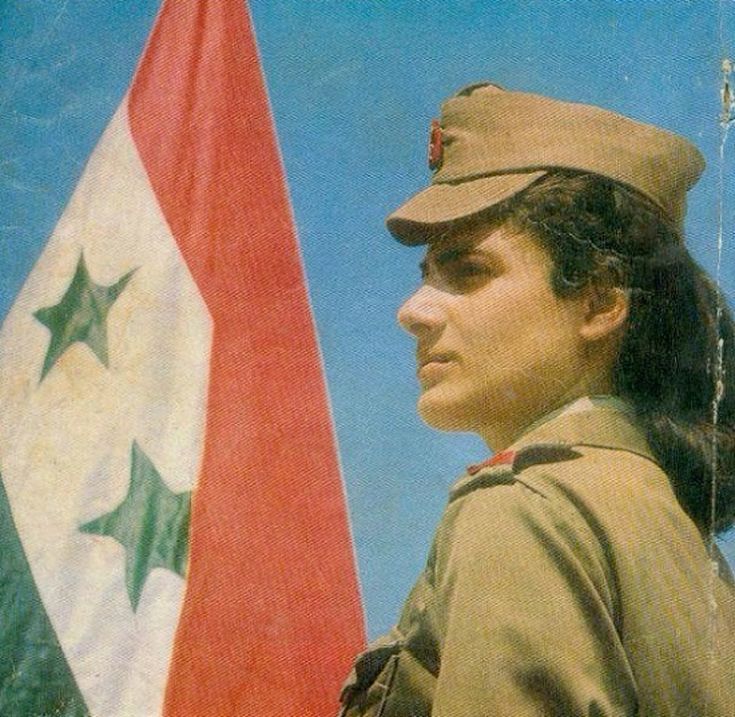
The destruction of this west Asian republic, which had for a long time curtailed imperialist aspirations in the region, has long roots. In 1966, the programme for land reform, socialist national development and wealth redistribution, initiated by the government of Salal Jadid’s left wing of the Baathist party, alarmed Washington. These aspirations for socialist construction were quickly hindered by the war of aggression waged by Israel in 1967 and the state has had to fight for its very survival ever since. Imperial aggression led to a more pragmatic Arab nationalist developmental approach under Hafez Al-Assad’s “corrective movement”, which aimed to attract foreign investment and regional Arab capital, while maintaining strategic industries under state ownership and a fierce anti-Zionist, anti-Imperialist foreign policy. The environment of structural adjustment in the US dominated unipolar moment, led the Baathists to liberalise many of these industries from the 1990s, further deepening the economic crises in the country.
US unilateral sanctions on Syria started in 2003 over Bashar Al-Assad’s refusal to back the invasion of Iraq. Wikileaks cables in 2011 revealed that from 2006 US State Department funnelled as much as $6 million to a group of Syrian exiles to operate a London-based satellite channel, Barada TV, and also financed activities inside Syria for the removal of Assad. The US also supported Turkish opposition leader Recep Tayyip Erdoğan, over then President Bülent Ecevit’s denunciation of and refusal to support the invasion, with George W. Bush even inviting him to the white house while he was still in opposition.
While supporting the PKK, Syrian officials simultaneously repressed domestic Kurdish political expression. Rather than a simple case of national chauvinism, this repression reflected concerns about imperial manipulation of ethnic divisions based on historical memories of French colonial demographic engineering, in which the French initiated mass Kurdish migration, from historic Kurdistan into northern Syria to fracture and weaken Arab nationalist aspirations.
At the onset of operation Timber Sycamore, the US funded and supported all out Takfiri assault on Syria, Kurdish forces entered a Faustian bargain with the US in order to counter an advance by ISIL. The Americans then went on a carpet bombing rampage in many cities, committing the worst war crimes of the so-called Syrian civil war. Under existential pressure, Kurdish groups made tactical decisions which would align them with the US strategy. The United States helped the Kurdish-led Syrian Democratic Forces(SDF) to take large parts of territory which was largely populated by Arabs and other groups. This region in north and east Syria, is where 90% of Syria’s oil and its best agricultural land lay. The US used its leverage over the SDF to loot Syria’s oil for ten years, and this solidified US backed Kurdish domination of this region under the military command of Mazloum Abdi. By the time the takfiris marched to Damascus last winter, soldiers in the Syrian Arab army were on the breadline due to years of economic warfare, while the Salafist HTS, previously known as Al-Nusra front, were receiving lucrative salaries funnelled through Qatar and Saudi Arabia. After HTS took power, the SDF recommenced selling oil to Damascus.
The recent death and destruction caused by the current abandonment of the YPG reflects the broader failure of US imperialism’s asymmetric campaign against Iran and the Axis of Resistance. Having failed to break Iran through sanctions, sabotage, and proxy warfare, Washington now appears to calculate that the thousands of ISIS prisoners long held by Kurdish forces are of greater strategic value than the YPG itself. Henry Kissinger once remarked that it is dangerous to be an enemy of the United States, but to be its friend is fatal. The Kurdish forces in Syria are now confronting the truth of that observation. After more than a decade of US-backed Kurdish administration over the oil-rich regions of northern and eastern Syria, the YPG is discovering what Noriega, Saddam Hussein, and countless other imperial proxies across the Global South learned before them; when a client outlives its usefulness, it is discarded without hesitation.
Recent geopolitical shifts caused by US actions, have imperilled the NATO alliance, The recent intelligence assistance to Iran by Turkey during the CIA/ Mossad destabilisation campaign, has caused a rift in the PKK between the US dominated wing led by Mazloum Abdi and the Turkish dominated wing under the control of Öcalan, while many Kurdish civilians are left to fend for themselves amid an extremist onslaught.
The Öcalan Cult
Ever since I got involved in an environmental campaign some years ago, I became aware of the veneration of Abdullah Öcalan by large sections of European anarchists and the environmental left. Writings attributed to him on ecological society have been a guiding light to many in the environmental left who want to build an ecological society.
Öcalan was the leader of the PKK, a Kurdish rebel group fighting the Turkish government since 1978. He was captured in Kenya in 1999 with the help of US intelligence. In 2014, videos were leaked of his capture, interrogation and aftermath by the by ruling AKP in order to damage the Kemalists who were in power at the time of his capture. They appear to show Öcalan being transported, capitulating under interrogation and a subsequent cordial exchange filmed with hidden camera showed Öcalan negotiating how he was going to manage the PKK on behalf of Turkish authorities. The AKP and the Kemalists constantly battle each other control over İmralı, the Island prison where Öcalan is held, because they know that control over Öcalan means control over the opposition.
Shortly after capture in 1999, Öcalan then changed his ideology and the official ideology of the PKK from Marxist-Leninist internationalism to democratic confederalism, an anarchist type tendency based on the writings of Murray Bookchin. This was an ideology which perfectly fit the well-intentioned but confused yearnings of the alter-globalisation movement in the west. The decline of Marxism in this case was caused not merely by the fall of the Soviet Union, but also by the intellectual void left by the mass slaughter of Communists in Asia and Latin America in preceding decades and historical revisionism which feeds a shallow moralising judgment on the part of western leftists of the difficulties faced by real existing socialist states.
The move from Marxist-Leninist internationalism towards this type of decentralised form of anarchism caused many to leave the PKK in 1999. Many felt that the material struggle for working class power had been replaced with moralism, localism, and utopian communal schemes that leave the masses exposed to imperialist designs. This wasn’t a revolutionary development but ideological retreat, an erosion of the fundamental principles necessary for genuine liberation. They were proven correct in Syria, as the folly of building a Utopian commune in the wreckage of, and under the protection of American bombs became evident.
In 2015, at the onset of the US-YPG alliance in northeast Syria, the Kurdish cause in Syria was sold to large sections of the Euro-left as the great fight against global fascism. Romantic images of Female fighters apparently fighting an ancient patriarchy were promoted on the pages of the Guardian. International brigades were organised from affluent north-western European countries. One has to admire their bravery yet at the same time lament their naiveté.
Ecology and feminism were the weapons used by the imperialist powers as many western radicals sought a symbolic anti-fascist battlefield in PKK/YPG, rather than understanding the geopolitical context. The discourse emanating from the commune of Rojava extolled the virtues of Kurds as a progressive group with national aspirations while reducing Arab groups to their sectarian identities despite the fact that these identities exist within the Kurdish community too. In this way, all varieties of Arab nationalism and their historically progressive aspirations were erased from the conversation.
Over time, writings attributed to Öcalan writings got more abstract and Foucaultian(meanwhile Bookchin, whose writings inspired democratic confederalism, rejected many anarchist tendencies, maintained Marxist dialectics and always had an aversion to Foucault and post-structuralism). One can’t help but interpret this as anything other than an attempt to appeal to the sensibilities of western academics. This author cannot help but speculate whether they are actually his words, or that of a ghost-writer from a well-oiled NGO or worse, NATO think tank.
Speculation aside, the end result is the same: the narrative of a “World war III” in which equally wicked belligerent “nation states” compete for a vague Foucaultian ‘power’, erases the core-periphery contradiction which defines the imperialist character of global capitalism. This anti-authoritarianism fits all too well with the orientalist sensibilities of the NGO friendly pseudo-left of the imperialist countries.
Equally telling is the naiveté of those who still treat Öcalan as a revolutionary. Their uncritical devotion reveals a deep misunderstanding of the imperialist nature of global capitalism. They mistake cultural symbolism for class struggle, confuse Western NGO approval for international solidarity, and ignore the material consequences of aligning with imperialist powers. Far from being principled opponents of imperialism, these admirers embrace a politics tailor made for imperialist tolerance - decentralised, depoliticised, and stripped of the proletarian state power required to actually confront this domination and expropriate the expropriators. From an environmental standpoint, how does one expect to protect land, air and water from the ravages of primitive accumulation, in a world of balkanised proxy “communes”?
As the new phase of the US-led imperialist project rips apart the last remaining vestiges of multilateralism, this balkanisation is a gift to the Paleo-liberals. It is the aim of a large part of the US establishment to do this to other frontline targets. If people of the north truly want to help the people of the south, they should work to disarm their own imperialist governments support for Zionism. They should work against the mechanisms of global financialization, debt bondage and hybrid warfare which turn the people of the south into price takers, a large labour reserve which can be mobilised, exploited, or worse, turned into mercenaries or proxy armies which support the US war machine, which is turning the world into a smoking ball of ashes and rubble. This is a far better use of time and resources than projecting utopian desires onto a chosen indigenous group.
They should also align with the working class, be they urban or rural, and support true revolutionaries in the global south: as Turkish and Kurdish communists at the margins of NATO fight for a world free from the death grip of capital, they are subjected to all sorts of torture and coercion in the dungeon prisons of Anatolia. They refuse to capitulate and at the time of writing, two prisoners have been on hunger strike for over thirty days. Anti-NATO political asylum seekers, particularly from these groups, face the slow violence of discrimination in the European asylum system, (as well political persecution in EU Penal systems, particularly in Germany, due to bogus terror lists), while PKK members and asylum seekers who denounce NATO’s enemies get fast tracked.
Blurring the distinction between imperialist nation states and developmental states in the south creates an environment of ideological confusion among progressive people who in the north who are on a journey to find an ethical and revolutionary political programme which they can stand by. Recognising this distinction and supporting the sovereignty of anti-imperialist developmental states, warts and all, is not state worship. We do not have to deny the existence of repressive apparatus of the state nor condone when they are employed. But not condoning does not mean we have to blindly condemn. Western funded NGO and humanitarian organisations limited focus on national governments of the global south and their leaderships as the source of all accountability for the ills done to various ethnic minorities and for environmental crimes is no mistake. Writings attributed to Öcalan further feed into this strategy of intellectual structural adjustment.
Our sympathy must always lie with the civilians and minorities now facing massacre at the hands of Western-backed Salafist extremist forces. But solidarity with the oppressed does not require political amnesia. The Kurdish leadership cannot be absolved of responsibility. Years of open collaboration with US imperialism and Zionism by figures such as Mazloum Abdi have paved the way for this catastrophe. The abandonment of the quest for statehood by Öcalan leaves Kurds defenseless under international law and removes a cornerstone of self-determination. Even the reactionary imperialist aligned administration in Iraqi kurdistan which is dominated by the Barzani clan, they still understand this. As is always the case under imperialism, it is not the collabotatory leadership that pays the price, but the working masses and the poor. Kurdish civilians are now being sacrificed to imperial calculation.
The same Western left that loudly celebrated Rojava and now since January 2026 loudly calls for its salvation was conspicuously silent when Alawite communities were being massacred by these same extremist gangs last year, and again when Druze populations were targeted later in 2025. This selective outrage reflects the continued Western left’s alignment with imperial narratives and agendas, rather than a commitment to principled anti-imperialism.
Without a deeper understanding of imperialism and global capitalism, the energy created in the west by the movement against genocide in Gaza will go the same way as of the energy generated in opposition to the invasion of Iraq, when faced with the dilemma of taking a principled stand against the imperial assault on Libya in 2011.
The people of the Syrian Arab Republic sacrificed it all for the Palestinian cause, and were anti-imperialist until the end. The republic is no more, but we will one day see the world it aspired to create in the days of the revolutionary project led by Salah Jadid, through class struggle, socialist construction and revolutionary patience, rather than escapism, moralism and culturalist projection of desires.