Róisín McAleer
He presents himself as measured, informed, allergic to simplistic takes. He warns against romanticising states that oppose Israel or the United States. He performs balance. He positions himself as the sober, or more experienced adult in the room. And yet, when imperial violence becomes undeniable, he reaches reflexively for the language of the very powers he claims to oppose.
Joe is a textbook example.
While the death toll of Iranian school children was rising on 28 February 2026, Joe reminds us that “we should not forget that the Iranian state regime is barbaric and needs to be overthrown.” Joe reminds us that “opposition to Israel/US cannot blind us to the evils that Iranian people have been subjected to for decades.”
The political content of his comment is reactionary enough. But what does his timing tell us? The reflexive centring of Western narratives even in spaces that imagine themselves anti-imperialist leaves a lot to be desired. Caitlin Johnson writes about this a lot.
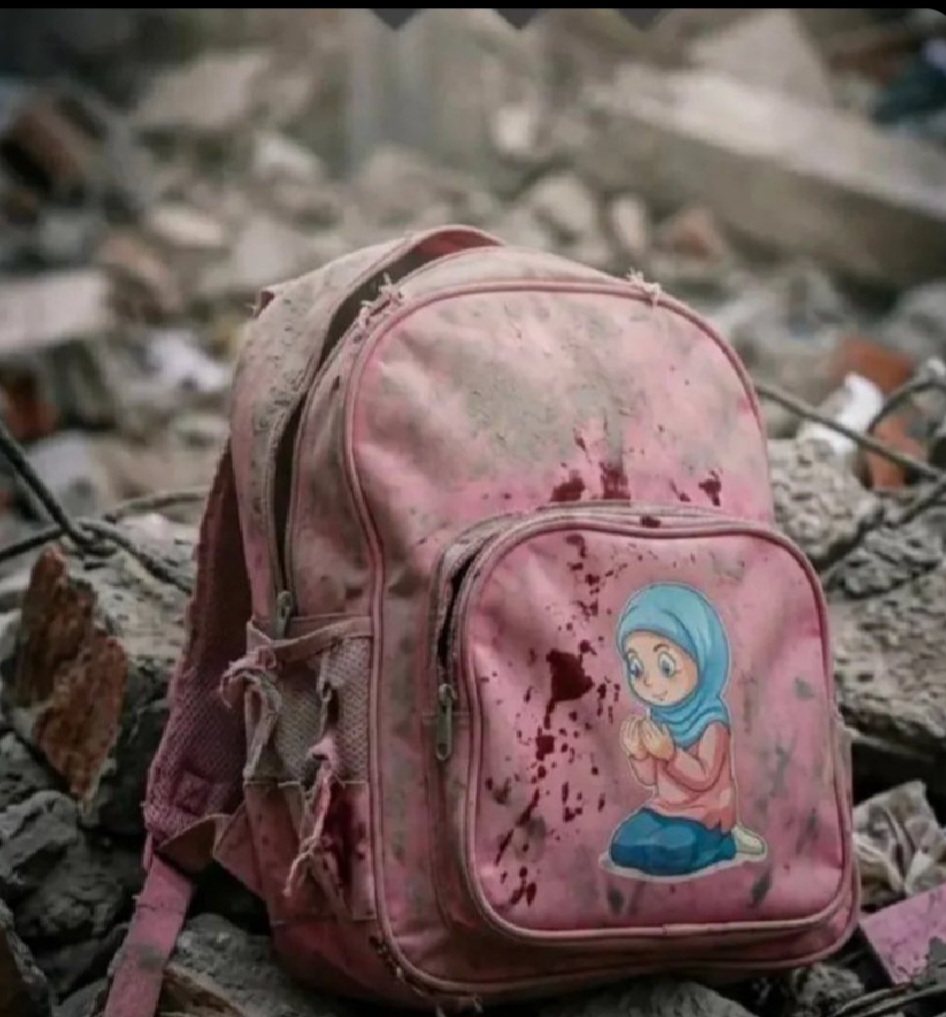
On the day that over 100 innocent children are killed by US bombs, the urgent task for anyone serious about defeating Zionism is to oppose the empire that drops the bombs. Instead, Joe chose that moment to foreground the “barbaric regime” and to speak of overthrow. The massacred child victims disappeared entirely. The state targeted by Washington moved to centre stage as the primary moral problem. Is this stupidity, ideological capture, or worse again, something else?
We have seen this script before. Iraq is invaded and Joe turns the conversation to Saddam. Libya is destroyed and Joe pivots the conversation to Gaddafi. Syria is balkanized and Joe dominates the conversation with anti-Assad rhetoric. He says he is anti-NATO and pro-Irish neutrality(?). Yet he is 100% behind the US funded war in Ukraine.
A country is sanctioned, destabilised, bombed and the discussion swivels to how dreadful its government is. The structural violence of imperialism fades while the pathology of the targeted state dominates. Joe’s intervention follows this pattern with almost mechanical precision.
He likely imagines himself informed, learned and principled. He may even believe that by condemning the Iranian state he is defending the Iranian people. But when people like Joe assert that the “regime needs to be overthrown,” in the context of an active illegal and unprovoked massacre, he is not being neutral, or even human.
To invoke overthrow while the US and Israel is in the throes of killing innocent Iranian chidren is to echo empire strategic vocabulary. That they are all girls, an even deeper irony given the West’s infatuation with women’s rights.
What makes this particularly revealing is that Joe moves in a pro-Palestine space. In that context, participants rightly condemn Israel as a settler-colonial state backed by US power. They seem to understand occupation, collective punishment, dehumanisation. Yet when the target shifts from Gaza to Tehran, some revert instantly to the civilisational language of barbarism and regime pathology. Sovereignty becomes conditional. Violence becomes contextual. The empire’s enemy becomes the primary object of moral outrage.
There is an unmistakable deep racism embedded in this reflex. The description of a non-Western state as “barbaric,” deployed at the moment its children lie slaughtered from US bombs, reproduces a hierarchy of civilisation that has long underwritten colonial intervention.
The Western regime, the Epstein class remains untouched, or implicitly reformable. The targeted state of Iran is cast as essentially depraved.
The tragedy is compounded by the silence of others. In a group of activists, people who pride themselves on being anti-establishment, or simply, people of conscience and pro-humanity, when no-one asks why, the emphasis falls on overthrow rather than on condemning imperial blood lust.
This is the silence that reveals the limits of pro Palestine spaces. While Israel can be named as a colonial “aggressor,” the broader architecture of US imperial power remains partially insulated from scrutiny.
Joe’s comment is not an anomaly; it is a symptom. It reflects how deeply imperial ideology penetrates even so-called oppositional spaces. The colonised brain is a scourge upon our movement. When people absorb the dominant narrative that official enemies are uniquely evil, that regime change is regrettable but sometimes necessary, that one must constantly distance oneself from states in the empire’s crosshairs after 2 and half years of genocide in Palestine, then something is not right.
In reality, this kind of distancing functions as a safety valve, ensuring the movement never strays too far from the system’s acceptable bounds.
There is nothing “learned” about reproducing the talking points of empire at the very moment it is killing civilians. There is nothing courageous about invoking overthrow from the safety of the imperial core. And there is nothing anti-imperialist about shifting moral focus away from US Israeli barbarism onto the alleged barbarism of its targets.
If pro-Palestine spaces are to mean anything, they must develop the political confidence to challenge this posture. Anti-imperialism is the refusal to allow the Zionist imperial regime and its Epstein class to be normalised, contextualised, or morally balanced by rehearsing the crimes of those under attack. When that refusal collapses, when regime-change rhetoric is allowed to pass as wisdom, the enemy’s propaganda no longer needs to be imposed from outside. It speaks through those who believe themselves above it.