Róisín McAleer
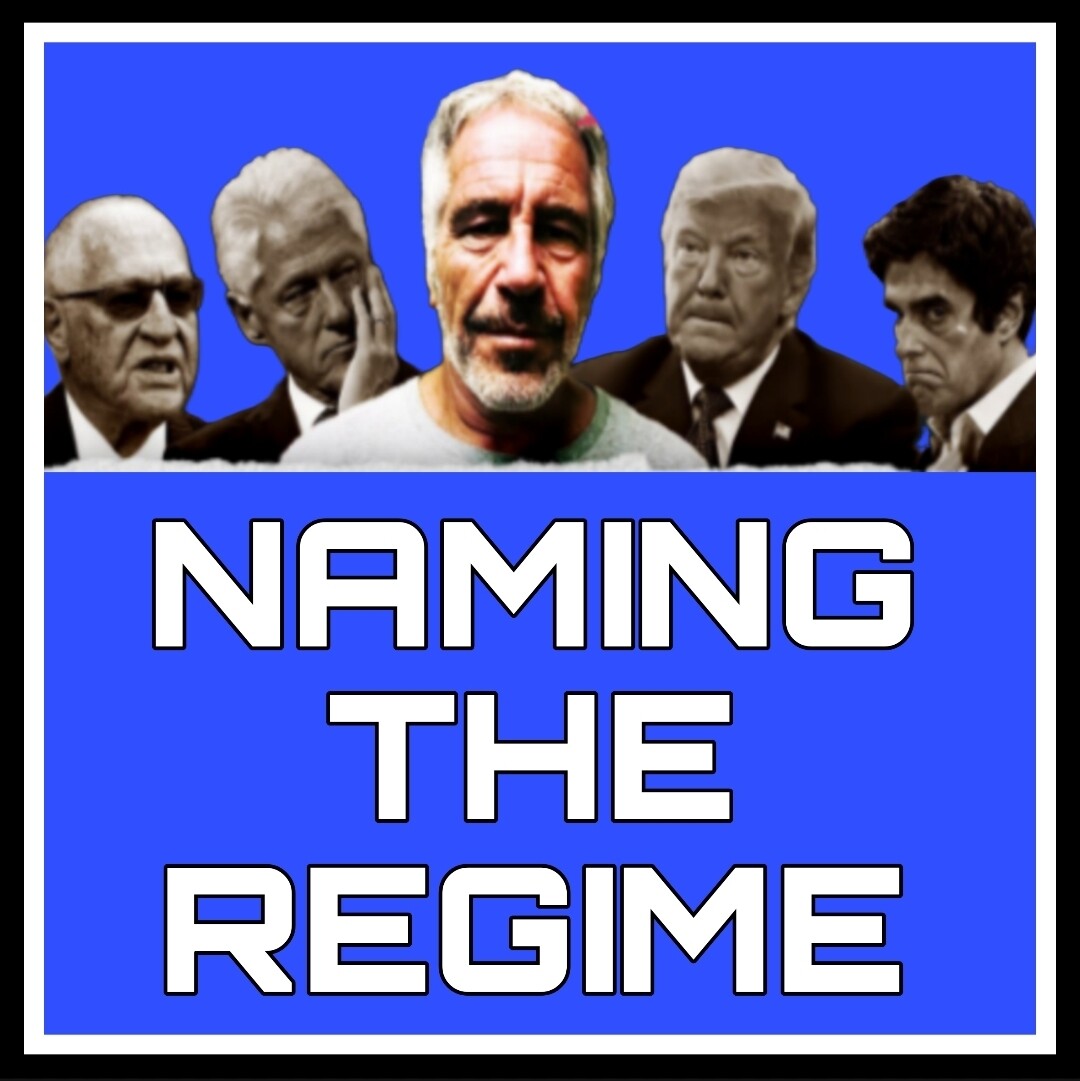
The language of empire is never accidental. Words such as “regime” are carefully reserved for the empire’s official enemies, while the word system is used to normalise the classist, racist structures that dominate everyday life.
Capitalism is not a natural system. Today, it is an organised structure of class rule maintained through state power, Zionist coercion, and manufactured consent.
At home, the refusal to name capitalism as a regime masks the slow violence inflicted upon the working class. Violence need not always be spectacular. It can be bureaucratic, incremental, and even polite. It appears in privatised social services, in rent extraction, in precarious work contracts, in overcrowded public hospitals alongside gleaming private hospitals with à la carte menus.
Contrary to popular assumptions, capitalism is not a corrupt or dysfunctional system. The system is not incompetent or lacking in accountability. Excuses often proffered by the frustrated or more sympathetic middle class serve the interests of the ruling class, not us, because they refuse to see it as class power functioning precisely as designed.
Lenin was clear in his analysis. The state is an instrument of class domination. When public infrastructure decays while private wealth expands, when housing is an asset, and healthcare is 2-tiered, the state is not failing. It is protecting capital accumulation. The working class pays twice, through taxation and through commodified access to what should be social rights. Privatisation is always presented as reform but in reality, it is a trap.
The violence of the regime is not only material. It is historical and psychological.
Ireland carries inherited trauma: Dispossesion, An Gorta Mór, landlordism, colonisation, and structural subordination within empire. The abuses of the Catholic Church in industrial schools, clerical abuse, and institutional shame further deepened the wounds that were never collectively processed. A nation shaped by starvation, migration, and silence develops habits of deference and survival. Capitalism does not create trauma from nothing. It exploits what history has sedimented.
The divide between the haves and the have-nots is therefore not only economic, it is epistemological. The middle class, buffered from the sharpest edge of austerity, often mistakes proximity to institutions for power over them. It looks to Western academics, policy experts, and NGOs as authorities but fails to recognise that ideology is produced within material structures. Universities are funded by Zionist capital. Think tanks are Zionist donor-dependent. NGOs operate within the permissible boundaries set by Zionist controlled states and corporations. Consent is manufactured by the Epstein class media and the credentialed.
The ruling class presents its interests as universal interests. Austerity becomes “responsibility.” Militarization becomes “security.” Integration into EU Battlegroups becomes “maturity.” Criticism of EU is framed as irrational populism, even when those rules kill migrants at sea, entrench housing crises and constrain democratic choice.
When children are slaughtered in Iran, in unprovoked and illegal US-Israeli attacks, following sanctions, covert and overt destabilisation efforts, or failed colour revolutions, Western discourse frames it as the terror of a foreign regime. Blame is centred on the resistance, protecting the legitimacy of the Epstein class and Zionist regime.
The crimes of the Epstein class are treated as individual pathology rather than systemic barbarism and impunity. Epstein network protection is also structural. Wealth will always shield itself. Kompromats close ranks. Law bends around capital.
And here enters the controlled opposition: articulate, media-friendly, fluent in the language of human rights and democracy, yet fundamentally unwilling to confront the Epstein class. It critiques corruption but not capitalism. It denounces personalities but not ownership structures. It mobilises outrage without threatening the system. In essence, it is anti–working class while claiming moral superiority.
So here’s some questions for the self-identified left who claim to oppose the “state”.
At demos we hear you say “our government.”
Our? In what material sense is it ours?
When housing policy favours direct foreign investment over tenants, when healthcare is a privilege, when fiscal priorities align with the coalition of the willing and EU policy rather than working-class communities, whose government is it?
You speak of neutrality, but not of sovereignty. But what is neutrality when NATO forces already occupy our country? What is neutrality without economic autonomy? If the EU or the US can discipline a state more effectively than voters can direct it, who truly governs?
You reserve the word “regime” for adversaries abroad. Why never for the regime of finance capital at home? Why is structural adjustment elsewhere authoritarian, but austerity here “prudence”?
You invoke “our democracy.”
Where is this democracy when privatisation of waste, water, homes, schools, clinics, hospitals, forests, landbanks, parks etc persists regardless of electoral change?
You warn against divisive language. Yet is there anything more divisive than a manufactured housing crisis? Anything more inflammatory than public wards overflowing while private hospitals profit?
You speak of “our allies.” Allies in what? In stabilising trade routes? In expanding military budgets? In maintaining a Epstein class that feeds on children to sustain itself.
You condemn “dictators” abroad to disguise your othering and racism. But what do you call the quiet coercion of debt, eviction, homelessness, addiction, unemployment, and precarity? Is violence only visible when it wears a foreign flag?
You use passive constructions whenever capital is responsible:
“Mistakes were made.”
“Markets reacted.”
“Pressures emerged.”
Who made the mistakes? Who are the markets? Who exerts the pressure? Language erases agency, and in doing so, protects the Epstein class.
When you say “we,” who is included? The landlord and the tenant? The CEO and the nurse? The arms exporter and the unemployed graduate? “We” is a convenient fiction in a society structured by class antagonism.
And finally, if this system truly belongs to the people, why does it respond with such hostility whenever the people attempt to transform it fundamentally?
The task of anti-imperialist politics is not to criticise US-Israeli interventions while simultaneously pushing communism on those in this moment who are resisting Zionism in Iran, and elsewhere. It is to expose and confront the domestic structures HERE AT HOME that enable Zionist domination. The same financial institutions that foreclose homes fund genocide in Palestine, and attack on Iran. The same media that pathologises resistance in Palestine, in Iran, in Yemen, in Lebanon, normalises and rationalises inequality at home.
Ireland’s working class does not live in a democracy drifting imperfectly toward justice. It lives within a regime. A regime that privatises necessity, commodifies health, commodifies care, silences, disciplines and demonises dissent, and shields Zionist puppet politicians from accountability.
Regimes depend on legitimacy as much as force. They survive because language obscures ownership, because “our government” replaces “their (Free) state,” because austerity is framed as an inevitable outcome, rather than choice.
To pierce that illusion is the beginning of political clarity.
The regime will not reform itself. History shows us this. The question is whether the working class can recognise its own collective power, stand up and organise accordingly.
Only then does the language change. Only then will “ours” begin to mean something real.