Róisín McAleer January 2026
As a woman, an anti-imperialist, and a teacher of History and literacy in Ireland, I approach discussions of Iran with both political clarity and professional concern for evidence. Much of what passes for “common sense” about Iran in Western media, particularly regarding women, collapses under even minimal historical or statistical scrutiny. Iran’s experience over the past four decades offers a powerful case study in how literacy, education, and women’s advancement can expand under conditions of sustained imperial pressure, sanctions, and economic warfare.
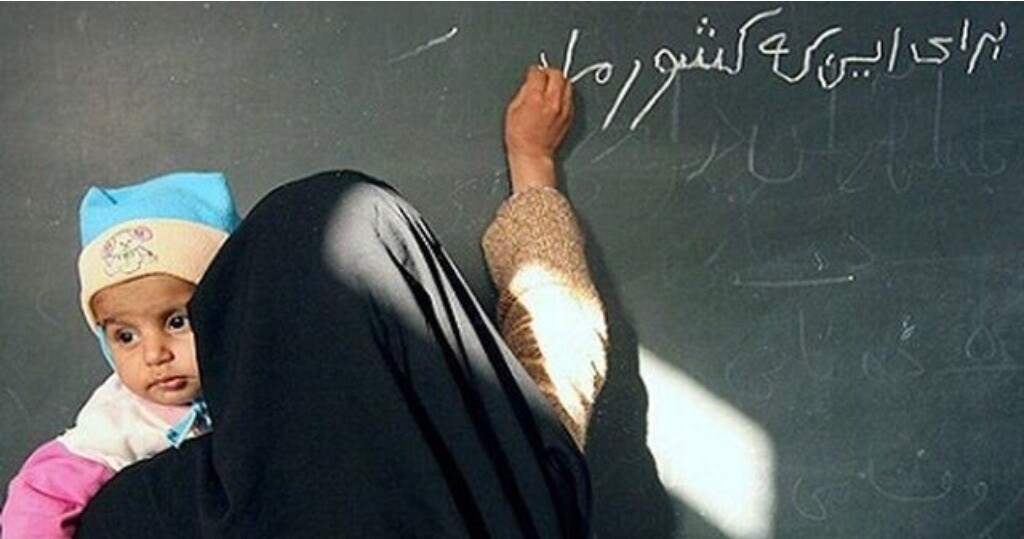
Since the 1979 revolution and the establishment of the Literacy Movement Organisation, Iran has carried out one of the fastest literacy expansion campaigns in modern history. Adult literacy, which stood below 50% prior to the revolution, has risen dramatically, with literacy among younger and working-age populations now exceeding 97%. Youth literacy is effectively universal, and young women have achieved near-parity with men. These gains reflect long-term state investment in education, rural outreach, and women’s access to schooling, all implemented while Iran faced sanctions explicitly designed to weaken its economy, infrastructure, and institutions.
Women’s participation in higher education is particularly striking. Today, women make up over 60% of Iran’s university students, studying across medicine, engineering, science, and the humanities. Women are increasingly present in research, teaching, and professional sectors, and while senior leadership positions remain male-dominated, the transformation in women’s educational attainment is historically unprecedented in Iran. Iranian women are not passive beneficiaries of policy; they are active agents shaping intellectual, scientific, and cultural life under difficult conditions.
These realities sit uneasily with dominant Western portrayals of Iran as uniformly “anti-women” or culturally backward. Such narratives rely heavily on selective moral framing, focusing almost exclusively on dress codes or isolated incidents,while ignoring measurable social outcomes such as literacy, educational access, and women’s participation in knowledge production. This selective focus is not accidental. Gender and human rights rhetoric has long functioned as a tool of imperial legitimacy, deployed to justify sanctions, political isolation, and intervention.
What is particularly troubling, from an Irish perspective, is how readily sections of the self-identified left reproduce these narratives. In debates that claim to oppose imperialism, Iran is frequently reduced to a caricature, stripped of context, history, and material conditions. Sanctions, which have profoundly affected healthcare, education, and economic development, are treated as background noise rather than central explanatory factors. This framing aligns neatly with Western and Zionist geopolitical objectives, reinforcing a familiar pattern: states that resist Western domination or pursue independent development are portrayed as illegitimate or oppressive, regardless of empirical evidence.
Iran’s educational achievements are inseparable from its insistence on sovereignty. Literacy rates that outpace regional averages, universal youth literacy, and women’s majority participation in higher education were achieved despite sanctions intended to obstruct precisely this kind of development. These outcomes challenge the assumption that social progress must follow Western political models or be externally imposed. They demonstrate instead that education, gender inclusion, and human development can advance through domestic policy and collective commitment, even under intense external pressure.
The implications for future generations are profound. High literacy and educational attainment equip young Iranians (women in particular) to participate more fully in social, economic, and cultural life. The narrowing gender gap in education lays the groundwork for expanded professional and intellectual participation, regardless of Western approval. This is not to deny contradictions or internal struggles within Iranian society, but a rejection of the dishonest framing and hypberbole that erases progress in order to sustain imperial narratives.
For socialists and anti-imperialists, Iran’s experience is instructive. Literacy, women’s education, and social development cannot be meaningfully separated from struggles for sovereignty and economic independence. Women’s empowerment is not a Western export of bikinis and Only Fans. In Iran, it has emerged through local agency, social policy, and resistance to imperial constraint.
Recognising these achievements is not romanticism. It is historical accuracy, and a necessary foundation for genuine solidarity.